


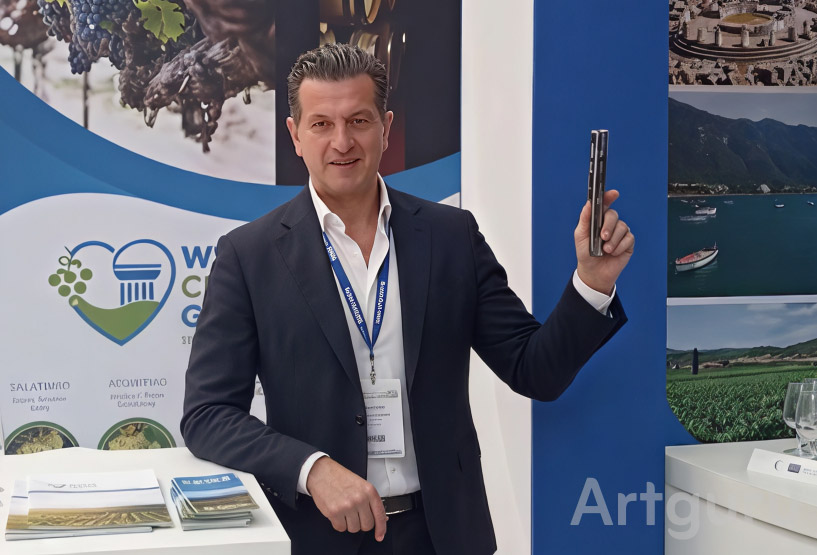
Ahead of The Flavours of Greece – Stockholm Greek Month 2026, Antonis Sioulis, founder and CEO of RECO Exports, speaks to HelloFromGreece and journalist Giorgos Zapartas about the opportunities for Greek products in the Swedish market and the importance of building long-term export partnerships.
Greek gastronomy is about far more than the flavours associated with memories, traditions and a sense of place. It is an essential part of Greece’s cultural identity, but also a dynamic sector of production with considerable potential for growth in international markets. The challenge, however, is not simply to introduce Greek products to consumers abroad. It is to make them part of their everyday choices and encourage people to discover them beyond the experience of a holiday in Greece.
This is the thinking behind The Flavours of Greece – Stockholm Greek Month 2026, an initiative organised by RECO Exports in Stockholm from 1 to 30 November 2026. The programme will showcase 82 Greek food and beverage companies, with support from six Greek regions. To explore the initiative and the wider prospects for Greek food and drink in Sweden, we speak with Antonis Sioulis, founder and CEO of RECO Exports. Our conversation covers the challenges facing Greek producers seeking to expand internationally, the opportunities offered by the Swedish market, and the role that coordinated export initiatives can play in establishing lasting commercial partnerships.
At its heart, this is a discussion about how Greek products can move beyond recognition to achieve a lasting market presence—and how an initial encounter with a product can develop into a long-term relationship with the consumer.
Interview with Antonis Sioulis
Mr Sioulis, thank you for speaking with HelloFromGreece. We are delighted to have the opportunity to talk to you. How did the idea of dedicating an entire month in Stockholm to Greek food and drink come about?
The idea behind The Flavours of Greece – Stockholm Greek Month is essentially a continuation of our long-standing presence and activity in the Swedish market. Our company has been active in Sweden and across Scandinavia for many years. Our work has included organising business initiatives, hosting Swedish businesspeople in Greece for visits to production facilities and direct meetings with Greek producers, as well as participating in major trade fairs across the Scandinavian market. Through this experience, we have seen that there is considerable interest in Greek products, but also a need for more structured, long-term initiatives to promote them. That is how the idea emerged: to create an entire month dedicated to Greek gastronomy, combining product promotion with tangible opportunities for commercial growth.
Why do you believe Sweden is a market worth investing in for Greek food and drink today?
Sweden is a particularly interesting market because consumers place considerable importance on quality, food provenance and healthy eating. These are values closely associated with Greek gastronomy and the Mediterranean diet. At the same time, our many years of experience in the market have shown us that there is significant room for growth for Greek products that combine authenticity with modern production methods and reliable export capabilities.
What does the name The Flavours of Greece mean to you? Is the aim simply to showcase products, or also to communicate the culture, traditions and history behind Greek food?
For us, The Flavours of Greece is about presenting Greece through its flavours. Every Greek product has a place of origin, a tradition, people and a distinctive story behind it—one that deserves to be told. Our aim is not simply to promote food and drink, but to showcase Greek gastronomic identity as a whole. We want Swedish consumers to discover the quality of our products, as well as the culture and values they represent.
If you had to explain in one sentence to a Greek producer why taking part in the programme is worthwhile, what would you say?
We would say that The Flavours of Greece offers a structured opportunity to present products directly to Swedish consumers, connect with professionals in the market and lay the foundations for meaningful new export partnerships.
As an organiser, can you recall a specific experience that convinced you of the potential of the Swedish market?
Through the business delegations we have organised and the relationships we have developed with Swedish professionals over the years, we have repeatedly seen strong interest in Greek production. When Swedish businesspeople visit Greece and meet producers, tour production facilities and experience local flavours first-hand, the potential of our products becomes particularly clear. These experiences have shown us that personal contact and the opportunity to taste a product can be the first step towards a commercial partnership. That is precisely the opportunity we want to develop on a larger scale through Stockholm Greek Month.
How would you describe the core concept of Stockholm Greek Month? Is it a food campaign, an export mission or a structured market-entry programme?
We would describe it as a combination of all three, with a clear focus on helping Greek businesses expand their international presence. Our underlying principle is that product promotion must go hand in hand with meaningful opportunities for commercial development. That is why the programme combines retail presence, restaurant partnerships, food-related events and business networking. We want to create a comprehensive experience that allows consumers and industry professionals to discover Greek products—and, crucially, enables those initial encounters to lead to further opportunities after November.
Why did you decide to run the initiative across supermarkets, restaurants, business meetings and a consumer food fair at the same time?
Establishing a product in a new market depends on several factors. It requires brand awareness, direct engagement with consumers, suitable distribution channels and relationships of trust with industry professionals. By establishing a presence across several channels simultaneously, we give Greek products the opportunity to reach different audiences. Consumers can discover them in supermarkets, try them in restaurants or at food events, while businesses can build relationships that may lead to commercial partnerships.
What can a Greek producer gain from participating, even if the product does not immediately secure a permanent listing in a store?
Taking part in an initiative of this kind is a valuable international business experience in its own right. Producers have the opportunity to gain a better understanding of Swedish consumer preferences, market requirements and the way comparable products from other countries compete. Even if participation does not lead to an immediate commercial agreement, the knowledge gained and the contacts established can provide an important foundation for future growth.
Will you use specific metrics or indicators to assess whether this model could be replicated in other markets?
We will evaluate the initiative based on both consumer response and the commercial results achieved. We want to examine how the products perform at retail outlets, the level of interest among industry professionals, the new contacts established and the potential partnerships that emerge. Feedback and experience from the participating businesses will also be an important part of the evaluation. Our aim is to develop an effective model that could potentially be applied in other markets.
What makes The Flavours of Greece more than a conventional promotional campaign for Greek products and turns it into a genuine export development initiative?
The key difference is that the initiative is not limited to a trade fair or a one-off product presentation. We are creating a structured framework through which Greek products can establish a tangible presence in the Swedish market and engage directly with both consumers and industry professionals. For us, success is not simply about someone trying a Greek product in November. It is about creating the conditions that allow that person to find and buy the same product in the months that follow. That is what turns promotion into a meaningful export initiative.
How would you assess the current position of Greek food products in the Swedish market?
Greek food products already have a positive presence in Sweden, particularly in well-established categories such as olive oil, olives and dairy products. However, Greek food production encompasses far more than the range the average consumer currently encounters on supermarket shelves. We believe there is considerable potential to introduce a wider selection of products, particularly those with a distinctive regional identity, high quality and a compelling story of origin.
What perception do Swedish consumers have of Greek gastronomy?
Greek gastronomy is associated with the Mediterranean diet, sunshine, holidays and authentic flavours. This is a positive image and provides a strong foundation for further growth for Greek products. The challenge is to broaden that perception. We want to show that Greece offers much more than the traditional products consumers already know. It also has a modern and diverse food industry with a great deal to offer.
Do you believe Greece has successfully translated its popularity as a tourist destination into commercial opportunities for its food producers?
Greece is a very popular holiday destination among Swedish travellers, which creates significant opportunities for Greek gastronomy as well. Many visitors discover and enjoy Greek products while on holiday, but they do not always find those products easily when they return home. We believe that this positive travel experience can be transformed into a lasting consumer relationship. Stockholm Greek Month aims to make precisely that connection: turning people’s affection for Greece into a more regular presence for Greek products in the Swedish market and in everyday life.
Is there particular interest in products from specific Greek regions, such as Crete, the Peloponnese, Macedonia or the Aegean islands?
Regional provenance is a particularly interesting aspect of Greek gastronomy. Each region has its own products, traditions and production methods, which can appeal to consumers looking for authentic flavours and distinctive food experiences. Through this initiative, we want to highlight that diversity and present Greece not as a single, uniform gastronomic offering, but as a country of many different flavours and regional identities.
How important are certified origin, quality, sustainability and transparency in production to Swedish buyers?
These factors carry considerable weight in the Swedish market. Consumers are interested in the quality of the food they buy, where it comes from and the conditions under which it has been produced. Greek products—particularly those with recognised quality and origin certifications—have an opportunity to demonstrate these strengths. However, it is essential that such advantages are communicated clearly and in a way that consumers can easily understand.
What are the biggest challenges facing Greek products when competing with products from other European and Mediterranean countries?
One of the main challenges is competition from established suppliers that already have well-developed distribution networks and a strong market presence. Transport costs, pricing and brand awareness also have a significant impact on a product’s commercial performance. Greek producers have considerable quality advantages, but these need to be supported by more systematic promotion, sound commercial preparation and long-term partnerships.
Could a stronger presence for Greek products on Swedish shelves also encourage more interest in travel, food experiences and tourism in Greece?
Food and tourism are closely connected. A Greek product can bring back memories of a holiday in Greece or inspire someone to discover a new destination. Through food, consumers can explore aspects of Greek culture and local traditions. A stronger presence for Greek products abroad can therefore also serve as an indirect form of tourism promotion.
How many Greek businesses are taking part in the programme?
The Flavours of Greece – Stockholm Greek Month brings together Greek businesses from different parts of the country, showcasing a broad range of food and drink products. Our aim has been to create a group of participants that reflects the diversity of Greek production and gives businesses of different sizes an opportunity to approach the Swedish market in a structured way. A total of 82 businesses are participating in the initiative.
Which parts of Greece do the participating businesses represent, and what types of food and drink will they showcase?
The participating businesses represent different Greek regions and a range of product categories, including olive oil, olives, wine, honey, traditional confectionery and other gastronomic specialities. Through this selection, we want to offer Swedish consumers a representative mix of traditional flavours and contemporary Greek products that can become part of their everyday diets.
What overall picture of Greek gastronomy do you want to convey through the participating businesses?
We want to showcase a Greek food culture rooted in high-quality ingredients, tradition and the distinctive character of each region, while also demonstrating how it continues to evolve and respond to modern consumer needs. Through the participating companies and their products, we aim to highlight both the authenticity of Greek production and the ability of Greek businesses to compete in a demanding international market.
What difficulties do Greek businesses typically face when trying to export to Sweden?
The main challenges involve gaining access to the right distribution channels, finding reliable importers, managing transport costs and meeting the requirements of the local market. For many small and medium-sized Greek businesses, entering a new market requires time, investment and specialised knowledge. Through this initiative, we want to make that process easier by offering coordinated promotion and opportunities to connect directly with relevant business professionals.
Are any of the participating businesses looking to enter the Swedish market for the first time?
The initiative is aimed both at businesses with existing export experience and at producers who want to explore the Swedish market for the first time. For these companies, participation provides an opportunity to present their products in a real market environment, gain valuable experience and assess the potential for developing new commercial partnerships.
What does it mean in practical terms for a Greek business to have its product available in 12 Swedish retail outlets?
Being present in 12 retail outlets gives Greek products direct access to consumers in Stockholm. This is an important opportunity because the products are not simply being presented to industry professionals; they are also made available to consumers in a real shopping environment. This allows businesses to gain a clearer understanding of consumer response and create the conditions for a possible continuation of their market presence.
How were the retail outlets selected, and how important is the involvement of chains such as ICA, Matvärlden, Coop and Hemköp?
The selection of retail outlets was guided by our aim to reach different consumer groups and ensure meaningful exposure for Greek products. Working with established retail chains, such as ICA and Hemköp, is particularly important because it creates opportunities to present our products through existing retail networks in Sweden. It also provides an initial basis for assessing their commercial potential.
Who will handle commercial negotiations and supply if a retail chain expresses interest in a product?
Establishing a permanent commercial relationship requires coordination between the producer, importers, distributors and the relevant retail chains. Our role is to create the right conditions for introductions and communication, allowing initial interest to develop into a meaningful business partnership. The next steps will depend on the capabilities of the parties involved and the agreements they reach.
What can access to an established supermarket chain mean for a small Greek business?
For a small Greek business, gaining access to an established retail network can be a significant step forward. It offers the opportunity to reach more consumers and build greater awareness of its products. At the same time, it brings additional requirements in terms of production capacity, reliable supply and commercial organisation. It is therefore not just a sales opportunity, but an important step in the company’s wider development.
Why did you decide to link the promotion of Greek products with Sweden’s restaurant sector?
Food is about more than purchasing a product. It is an experience connected with creativity, tradition and the enjoyment of eating. Through partnerships with restaurants in Stockholm, we want to show how Greek ingredients can be used in different and creative ways. Incorporating them into dishes gives Swedish diners the opportunity to discover new uses and flavour combinations, while also highlighting the cultural dimension of Greek food.
How can restaurants act as ambassadors for Greek products?
Restaurants and chefs can play an important role in shaping how consumers discover and perceive a product. Through a dish, an original recipe or an unexpected flavour combination, they can highlight qualities that consumers may not have been aware of before. When a Greek product is used creatively by a professional chef, it gains greater visibility and may encourage consumers to buy it and use it at home as well.
How will the Greek businesses work with the chefs at the 12 participating restaurants?
As part of the initiative, selected Greek products will be used by the participating restaurants, giving chefs the opportunity to create dishes inspired by Greece’s flavours and ingredients. The aim is to highlight the quality and versatility of Greek products and demonstrate that they can be part of not only traditional Greek cuisine, but also contemporary international gastronomy.
What role does Greek wine play in the initiative?
Greek wine is an important part of our gastronomic identity and has considerable potential for growth in international markets. Greece is home to unique indigenous grape varieties and a modern wine industry that deserves greater recognition. Through this initiative, we want to showcase that diversity and present Greek wine as an exciting choice that pairs well with both Greek and international cuisine.
What does participation in Stockholm Food & Wine offer compared with having products on supermarket shelves?
Stockholm Food & Wine offers an important opportunity to engage directly with an audience that is actively interested in food, wine and discovering new products. Unlike the supermarket environment, where purchasing decisions are often made quickly, a food and wine fair allows more time for personal interaction, tastings and detailed product presentations. These two forms of promotion complement one another and strengthen the overall impact of the initiative.
How important is the Greek diaspora in promoting Greek gastronomy in Sweden?
The Greek diaspora is a valuable link between Greece and Swedish society. Greeks who live and work in Sweden understand both Greek products and the characteristics of the local market. They can make a meaningful contribution to raising awareness of Greek gastronomy, developing professional contacts and strengthening Greece’s presence in the country.
Could this initiative mark the beginning of an annual event?
That is one of our main ambitions. We want The Flavours of Greece to continue and develop into an established annual initiative promoting Greek gastronomy in Sweden. We believe that a consistent presence and recurring, well-organised activities can increase awareness of Greek products and help build stronger partnerships. This year’s programme is an important step in that direction.
Which organisations and partners are involved in planning and delivering The Flavours of Greece?
Delivering an initiative of this scale and scope depends on cooperation between organisations, businesses and professionals in both Greece and Sweden. The participation of six Greek regions—Crete, the Ionian Islands, the North Aegean, Western Macedonia, Central Macedonia and Epirus—is particularly important. Through their businesses and products, they help showcase the richness, quality and diversity of Greek food production. We also receive valuable support from organisations and institutions active in Sweden. Their contribution strengthens the initiative’s links with the Greek diaspora, local communities and the business sector.
Equally important are our partnerships with professionals in the Swedish market, including retailers, restaurants, importers and distributors, who help establish a tangible presence for Greek products. Through this collective effort, we aim to create something more than a month of food-related events: a strong bridge between Greece and Sweden, supporting the long-term promotion of Greek gastronomy and opening up new commercial opportunities.
What role do importers and distributors play in establishing lasting business partnerships?
Importers and distributors are a key link in the process of bringing a product into a foreign market and maintaining its presence there. They understand local requirements, sales channels and commercial procedures. That is why establishing relationships with reliable distribution partners is a key priority for the initiative. Our aim is to help Greek businesses connect with partners capable of supporting a stable, long-term commercial presence.
What should Greek businesses know and prepare before deciding to take part in a similar export initiative?
Product quality is essential, but businesses must also be prepared to meet the requirements of an international market. Appropriate packaging, labelling, pricing, the necessary certifications and the ability to maintain a reliable supply are all fundamental requirements. Equally important are a willingness to adapt and an understanding that export growth takes consistency, patience and long-term planning.
Are you considering expanding the programme to other Swedish cities or other Scandinavian markets?
Our experience in Sweden and across the wider Scandinavian region means that we are interested in exploring these possibilities. Stockholm is the focus of this year’s initiative, but the model we are developing could potentially be adapted for other cities or countries in the future. At this stage, our priority is to deliver the programme successfully and evaluate its results.
What would it take to roll out a similar programme on a larger scale?
Expanding a programme of this kind requires coordination, strong partnerships and a comprehensive support network for participating businesses. Important factors include bringing more producers and organisations on board, developing new partnerships with retailers and restaurants, and ensuring that distribution is organised effectively. Above all, a consistent long-term strategy is needed to ensure continuity and deliver meaningful results.
What are the programme’s specific objectives for November 2026?
Our main objective is to strengthen the visibility and market presence of Greek food and drink in Sweden, while creating direct contact with both consumers and industry professionals. Through retail outlets, restaurants, food events and business meetings, we aim to give Greek businesses meaningful opportunities to promote their products and develop new commercial partnerships.
How many new business contacts or partnerships would you consider a significant result?
For us, success is not measured solely by the number of contacts made, but above all by their quality and long-term potential. Even a relatively small number of new partnerships could represent a significant achievement, provided they have the potential to develop into lasting commercial relationships. Our aim is to establish connections that continue beyond the end of November and lead to tangible cooperation.
Are there plans to continue or repeat the initiative in 2027?
Our intention is for The Flavours of Greece to be more than a one-off event. We see it as the starting point for a more consistent and structured presence for Greek products in the Swedish market. Once this year’s programme has concluded, we will evaluate the results, feedback from participants and the commercial opportunities that have emerged. This will help us assess how the initiative could be developed further in 2027.
Beyond sales, what would be the most important outcome for you?
The most important outcome would be to establish lasting relationships of trust between Greek producers and the Swedish market. Sales are, of course, an important measure of success. However, the real value of an initiative like this also lies in the partnerships it creates, the knowledge businesses gain and the opportunities it opens up for the future. We want the programme to leave a tangible and lasting mark on the market.
How would you like the position of Greek products in Sweden to have changed in three to five years?
We would like to see more Greek products on Swedish supermarket shelves, on restaurant menus and, above all, becoming part of consumers’ everyday choices. Our ambition is for Greek gastronomy to become more widely recognised—not only through traditional products that are already familiar, but also through new product categories and smaller producers with a great deal to offer. We want Greek products to become a trusted, go-to choice for quality among Swedish consumers.
What message would you give Greek producers who want to take the next step into international markets?
Greece has outstanding products, knowledgeable and passionate people, and a rich gastronomic heritage with the potential to stand out internationally. What is needed is greater investment in preparation, international outreach and the development of lasting partnerships. We would encourage every Greek producer to explore new opportunities and approach international markets with a clear plan, consistency and confidence. Through well-organised, collaborative initiatives, we can strengthen the position of Greek producers and demonstrate the true value of their products to consumers abroad.
From Recognition to Lasting Partnerships
Our conversation with Antonis Sioulis highlights that strengthening the presence of Greek products abroad requires more than the quality and authenticity they already offer. It takes a clear strategy, careful preparation, an understanding of each market’s needs and, above all, long-term partnerships that allow an initial effort to develop into something lasting. The Flavours of Greece – Stockholm Greek Month 2026 aims to contribute to this process by connecting Greek producers with the Swedish market through retail, restaurants and direct engagement with industry professionals.
For Greek producers, the challenge is not simply to introduce their products to a new audience, but to create the conditions for those products to secure a lasting place in the market. For Greek gastronomy as a whole, the ambition is to be recognised internationally not only as part of the holiday experience in Greece, but also as an everyday choice for quality, flavour and authenticity. Because international outreach delivers real value when an introduction leads to a partnership—and a first taste becomes the beginning of a lasting relationship.